You can have 10,000 followers and zero clients, while the coach with 300 people on her email list is booking calls every week.
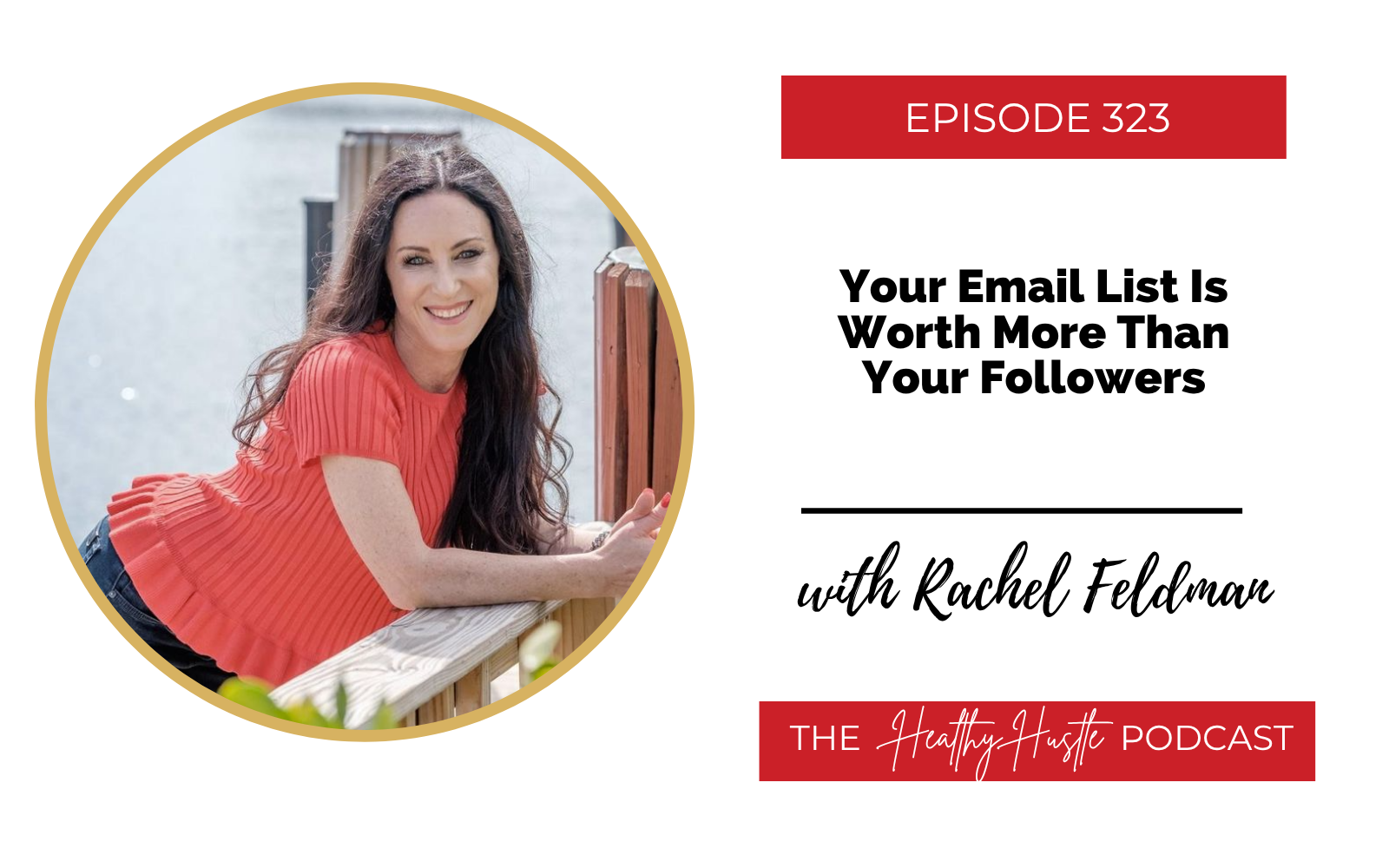
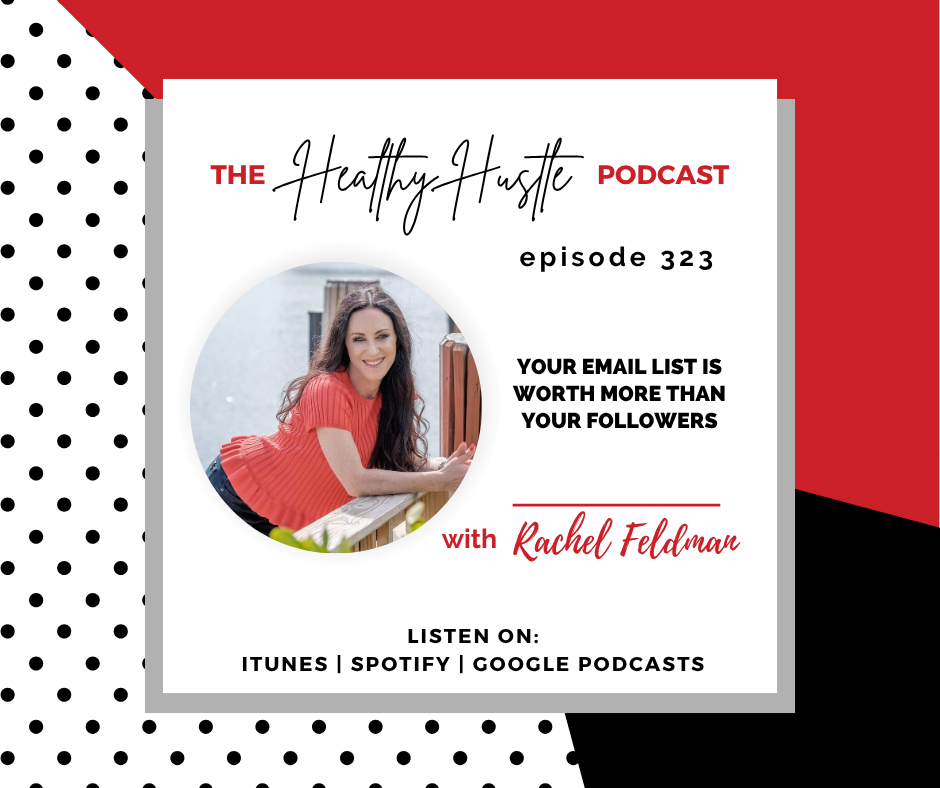
In this solo episode of The Healthy Hustle Podcast, Rachel Feldman gets straight to the point on why social media feels so hard right now, why your email list is the one marketing asset you actually own, and the simple three-email freebie sequence and weekly newsletter rhythm that turn subscribers into clients.
In This Episode, We Cover:
- Why followers and likes are not the same thing as clients
- The reel-making hamster wheel and why it is a platform problem, not a you problem
- Why Instagram, Facebook, and YouTube are rented land and your email list is owned
- The three-email freebie sequence: the auto-responder, your story plus a quick win, and the invitation
- Why your freebie is the first date, not the finish line
- How to run a consistent weekly newsletter without starting from scratch
- Rachel’s own story of perfectionism, over-apologizing, and what changed
- Your homework for this week
Likes Do Not Pay Your Mortgage
You spend an hour or two on a reel, refilm it four times, rewrite the caption, post it, and check back to find 11 views. Rachel’s message: that is not a you problem, it is a platform problem.
Instagram decides who sees your content, only a small slice of your followers ever see a regular post, and the rules change every month. Engagement feels good, but a post can get 200 likes and not one booked call. For health coaches who teach rest, boundaries, and nervous-system health, letting an algorithm run your week is the exact opposite of what you coach.
Social Media Is Rented Land
Instagram, Facebook, and YouTube can change the algorithm, drop your reach, or lose your account overnight. Your email list is something you own. When you send an email, it lands in the inbox with no algorithm deciding who sees it.
Someone who gives you their email is raising their hand and saying, “I have this problem and I think you can help.” That is a very different person from someone who double-tapped a reel in the carpool line. Keep using social media to meet people, but make its job moving them onto your list.
The Three-Email Freebie Sequence
Most coaches build a list, send the freebie, and then go quiet until a launch three months later, when nobody remembers who they are. The moment someone downloads your freebie is when they are paying the most attention, so do not waste it on a lonely delivery email.
- Email 1, right away (the auto-responder): deliver the freebie, introduce yourself in a few sentences, and ask one question: what made you grab this? Asking for a reply tells you what your people struggle with and helps your emails land in the inbox instead of spam.
- Email 2, your story and a quick win: share why you became a coach or a client case study (with permission), then give one small tip they can use today.
- Email 3, day four (the invitation): make the offer. A discovery call, your program, or your membership. Be clear, be direct, and do not apologize for it.
You write these once and they work every day while you coach, sleep, or travel, unlike a reel that disappears in 48 hours.
Your Freebie Is the First Date
Please do not skip email three. Your freebie is not the finish line; it is the first date, and at some point you have to ask them out. Not everyone buys after email three, and that is where the newsletter comes in: some people need to hear from you for months before they are ready.
A Weekly Newsletter That Keeps You Top of Mind
Pick a day and stick to it. Once a week is ideal, so when someone is finally ready, you are the coach they think of.
- Consistency beats cleverness every time.
- One idea per email: one tip, one story, or one lesson. It is not a magazine.
- Write like you talk, like you are texting a friend who asked for advice.
- End with one small step: reply, read a blog post, book a call, or watch your masterclass.
You already have the content. An Instagram post that did well, a podcast episode, a YouTube video, an evergreen masterclass, or a question a client asked on a call can each become an email. Nobody is counting likes in your inbox. You do not have to perform; you just have to help.
Consistency Over Perfection
Rachel shares that she once measured her worth by how a post performed. When she finally sat down to write a newsletter, she would spend three hours on it, rewrite the subject line ten times, and then not send it, or send it opening with “Sorry I’ve been MIA.” That was perfectionism and over-apologizing wearing a marketing hat, and it cost her clients.
What changed was deciding that showing up consistently matters more than showing up perfectly, and that an app does not get to decide what she is worth. Your people do not need a perfect email. They need to hear from you.
Your Action Step
Write your three freebie emails this week (or grab the done-for-you follow-up and indoctrination emails at yourhealthcoachbiz.com). Then pick a newsletter day, put it on your calendar, and send the first one, even if it is not perfect. Especially if it is not perfect. A client case study is a great first topic: what they were dealing with, what you did, and where they are now.
Final Thoughts
Views are not clients. Your followers are nice, but your list is your business. Treat it that way.
Resources
- Done-for-you follow-up emails and indoctrination email series (5 emails): https://yourhealthcoachbiz.com (use code GO50 at checkout)
- Book a session with Rachel to write your three to five freebie emails together: https://rachelafeldman.com
Need help building your low-ticket or high-ticket coaching offer?
Visit yourhealthcoachbiz.com to explore done-for-you programs and offers for health coaches.
Looking for one-on-one business coaching support?
Visit rachelafeldman.com or send me a DM on Instagram at @rachelafeldman