If you’ve been struggling with weight gain, poor sleep, anxiety, low energy, or simply not feeling like yourself anymore, you’re not alone.
Perimenopause can feel confusing.
One day your body responds the way it always has, and the next, nothing seems to work.
The problem is that most women are told it’s “just hormones” or that everything looks normal because their labs are within range.
But what if hormones are only part of the story?
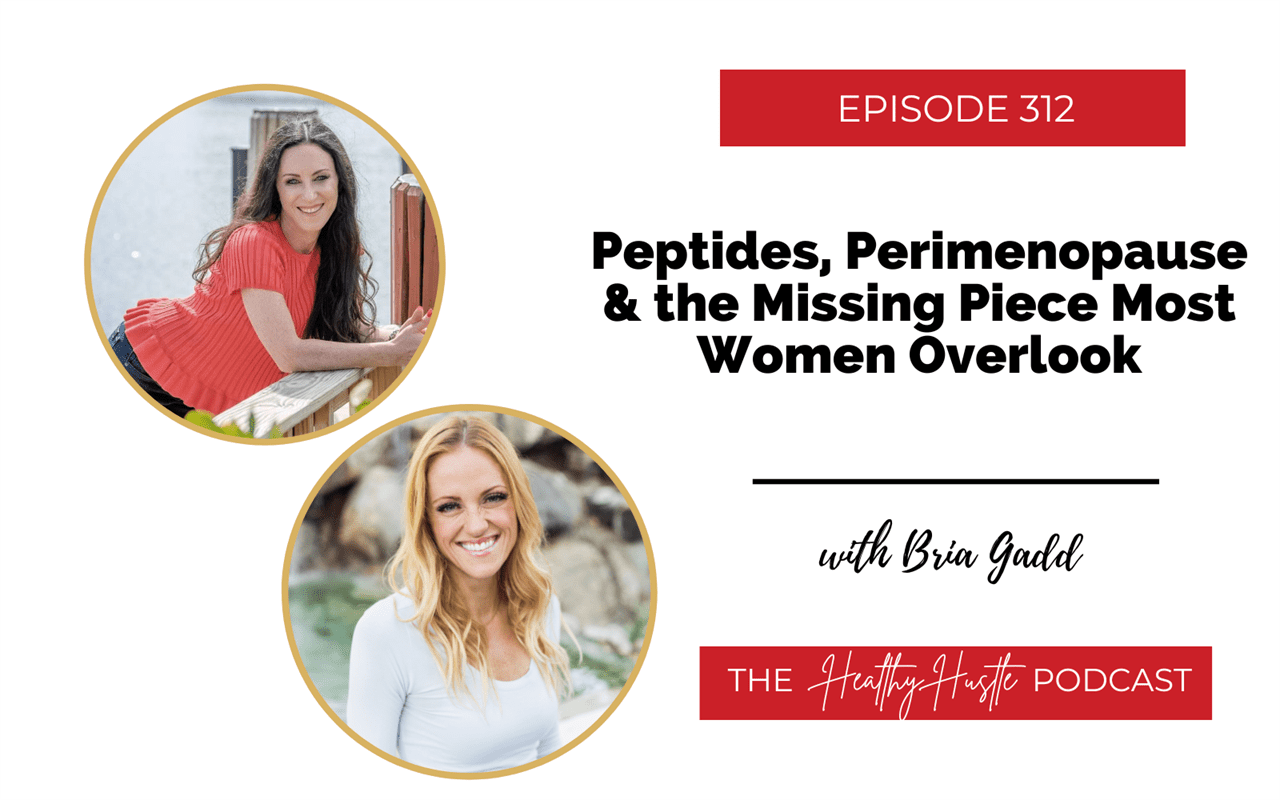
In this episode, I’m joined by Bria Gadd, Functional Diagnostic Nutrition® Practitioner and founder of The Period Whisperer, to talk about what’s really happening during perimenopause. We discuss why your gut, liver, thyroid, adrenal health, nervous system, and metabolism all play a role in how you experience this transition.
We also dive into peptides—one of the fastest-growing topics in functional medicine—and discuss when they’re helpful, when they’re not, and why they should never replace the foundations of good health.
If you’re a coach supporting women through midlife—or you’re navigating this season yourself—this conversation will help you better understand your body, make more informed health decisions, and feel empowered about what’s possible during this stage of life.
In This Episode, We Cover:
- Why perimenopause is about more than declining hormones
- The connection between gut health, liver function, thyroid health, adrenal health, and hormone balance
- Why so many women are told they’re “fine” despite feeling exhausted
- Whether every woman needs bioidentical hormone replacement therapy (BHRT)
- Why functional testing should come before treatment
- The importance of “testing, not guessing”
- What peptides are and when they’re actually beneficial
- Common mistakes women make with GLP-1 medications and peptide therapy
- Why nervous system regulation is essential during perimenopause
- The concept of “health debt” and how to rebuild your energy reserves
A Message I Want You to Hear
Your body isn’t broken.
It’s communicating.
Perimenopause isn’t something you simply have to survive or push through.
It’s your body’s way of asking for more support than it needed before.
The sooner you stop fighting your body and start understanding it, the sooner you can begin feeling like yourself again.
Why Perimenopause Is About More Than Hormones
Many women believe perimenopause is simply about declining estrogen.
But hormones are only one piece of the picture.
As hormone levels begin to fluctuate, your body relies more heavily on your adrenal glands, thyroid, liver, gut, and nervous system to maintain balance.
If those systems have been under stress for years, symptoms become much more noticeable.
That’s why two women can have completely different experiences during perimenopause.
Understanding the whole-body picture is the key to finding lasting relief.
Why Foundations Matter First
oday we’re surrounded by health advice.
Take this supplement.
Try this peptide.
Start fasting.
Use this biohack.
But before adding advanced tools, Bria reminds us to strengthen the foundations.
That means:
- Prioritizing quality sleep
- Eating whole, nutrient-dense foods consistently
- Moving your body every day
- Managing stress
- Supporting your nervous system
- Replenishing essential minerals
When those basics are in place, everything else works better.
Stop Guessing—Start Testing
One of the biggest mistakes women make is trying supplement after supplement without understanding what’s actually happening inside their bodies.
Functional testing helps answer the question: Why?
Instead of relying on trends or social media recommendations, testing provides a personalized roadmap based on your hormone pathways, gut health, liver function, metabolism, and overall physiology.
When you know the root cause, you can make better decisions with confidence.
Understanding Health Debt
One of my favorite concepts from this conversation is what Bria calls health debt.
Think of your body like a bank account.
Years of chronic stress, poor sleep, overtraining, under-eating, inflammation, and constant demands create withdrawals.
Eventually, those withdrawals leave your body with fewer reserves.
Perimenopause often exposes that deficit.
Before focusing on optimization, it’s important to rebuild your energy savings account.
Where Peptides Fit In
Peptides have become one of the biggest conversations in women’s health.
But they’re not magic.
They’re tools.
Bria explains that peptides work best after you’ve optimized your foundations.
Once your hormonal pathways, gut health, liver function, metabolism, and nervous system are functioning well, peptides can help support healing and performance.
They’re designed to enhance your progress—not replace healthy habits.
Your Action Step
Before purchasing another supplement or following the latest health trend, pause and ask yourself:
- Am I sleeping well?
- Am I eating enough nourishing foods?
- Am I managing my stress?
- Am I supporting my nervous system?
- Have I actually tested what’s going on?
Small foundational changes often create the biggest long-term transformations.
Final Thoughts
Perimenopause isn’t the end of your vitality.
It can be the beginning of your strongest chapter.
When you understand what’s happening beneath the surface, strengthen your foundations, and choose advanced tools intentionally, you give your body the opportunity to thrive—not just survive.
You deserve to feel energetic.
You deserve to feel strong.
And you deserve to enjoy this next season of your life.
Resources
Learn more about Bria Gadd:
Website: https://www.briatheperiodwhisperer.com/
Podcast: The Period Whisperer
Instagram: https://www.instagram.com/bria_period_whisperer/
Free Hormone Breakthrough Guide
https://www.briatheperiodwhisperer.com/hormonebreakthrough
Coaching
https://www.briatheperiodwhisperer.com/Coaching
Are you a health coach in need of done-for-you content?
Visit yourhealthcoachbiz.com and save 40% using code GO40.
Launch your podcast or get full podcast management services here:
Instagram: https://www.instagram.com/rachelafeldman
Website: https://rachelafeldman.com
Threads: https://www.threads.net/@janaomedia